
Knowledge: articles on how to talk to people aged 50+ in Poland. Figures with sources are in the Data section.
Five myths about the 50+ consumer that cost brands money
Each of these myths can be knocked down with one number or one story. All five are still sitting in briefs, because nobody ever checked them. It was enough to assume it once for it to stay for twenty years.

The five most common false assumptions about the 50+ consumer: that they have no money, do not shop online, do not switch brands, are attached to television, and that in an ad they must be suffering from some ailment. Each of them leads to a different media decision, and each of them spoils that decision.
Myth one: they have no money
According to Statistics Poland (GUS), there are 14.9 million people aged 50+ in Poland. With average spending of PLN 2,015 per person per month (GUS, 2025), that comes to about PLN 30 billion a month. We set out the full calculation and its limitations in the overview Poles aged 50+ in numbers.
Statistics are one thing, a concrete example is another. On the stage of I Love Marketing, a Polish marketing conference, I priced what I was wearing, item by item: suit PLN 1,050, shoes 400, handbag 400, underwear 500, cosmetics and hygiene about 800, services such as a manicure or the dentist another 800. A total of PLN 3,550, plus glasses and a car, which I did not even add to the list. None of these things was a product “for 50+”.
On top of that there is something you cannot see in the statistics of personal spending: money flowing within the family. Weddings, help with buying flats, prams for grandchildren, holidays for adult children. The money leaves a fifty-year-old's account, and the consumption shows up in a younger group.
Myth two: they don't shop online
About 79 percent of people in this group say they shop online. The ARC study „Dojrzali konsumenci w Polsce” (“Mature consumers in Poland”) showed that even in the narrower 60+ group nearly half shop online, and mobile banking is standard there, not a curiosity.
The myth persists mainly because online shops test how easy it is to buy on younger teams. A form in which you have to find light grey text on a white background is not an age barrier. It is a design barrier.
Myth three: they don't switch brands
69 percent of mature consumers say they will drop their current brand if they find a better solution. That is the opposite of the picture in which the older consumer has been buying the same aspirin for forty years and nothing will change their mind.
Loyalty in this group comes from satisfaction, not attachment. As long as the product works, the customer stays longer than in younger segments. When it stops working, they leave without sentiment.
Myth four: they are attached to television
46 percent of this group are increasing their online activity at the expense of television. So looking for this audience only on TV and in print means missing it in the place it has just moved to.
People aged 50+ in Poland have about 6.2 million active profiles on Facebook. It is a channel many agencies have written off as exhausted, and at the same time the one where the audience those same agencies ask about actually lives. The breakdown of reach, with methodology, is in the overview of the 50+ audience on social media.
Myth five: in an ad, something must be wrong with them
This is the costliest of the five, because it concerns the creative, not the media. When the 50+ group appears in an ad, it usually appears together with an ailment. Something does not work, something cannot be held in, something cannot be done in the morning. The alternative picture is a sad granny in a rag-coloured jumper whose mood is lifted by an appetite syrup.
The effect is the opposite of what was intended. A person who has nothing wrong with them does not recognise themselves in it and stops listening. And in this group, recognising yourself is the condition for letting the message in.
What happens when someone stops believing it?
Two friends of mine opened a guesthouse for twenty people in Zanzibar and were looking for Polish guests. The trip cost seven thousand złoty per person. I invited them onto the programme without much hope, because at the time I thought exactly what an agency would have thought: who is going to buy this for that kind of money.
Three trips of twenty people sold out within a week. A waiting list formed for the next dates. Nothing changed except one thing: someone finally told this audience about the offer, in the place where it actually is.
The values of 69 percent, 46 percent and 79 percent come from a conference talk that cited consumer research without naming the publisher. We give them with this caveat and are looking for the original publications, so that they can be checked at source. The demographic data and the spending calculation have their sources stated directly.
Sources
Beata Borucka, talk at the I Love Marketing 2025 conference, a Polish marketing conference (69 percent ready to drop a brand, 46 percent increasing online activity at the expense of television, 79 percent shopping online, the Zanzibar guesthouse case)
ARC Rynek i Opinia, „Dojrzali konsumenci w Polsce” [“Mature consumers in Poland”], 2023, CATI N=1500, 60+ group - arc.com.pl
Statistics Poland (GUS), „Sytuacja gospodarstw domowych w 2025 r. w świetle wyników badania budżetów gospodarstw domowych” [“The situation of households in 2025 in the light of the Household Budget Survey”], 27 May 2026 (PLN 2,015 average monthly spending per person) - stat.gov.pl
IQS, „Silver Shopper”, an analysis of the shopping behaviour of Poles aged 50+ - grupaiqs.pl
Quick answers
Does the 50+ consumer shop online?
Yes. About 79 percent of people in this group say they shop online, and in the narrower 60+ group nearly half do, according to a 2023 study by ARC Rynek i Opinia.
Are people aged 50+ loyal to brands?
They stay longer as long as they are satisfied, but 69 percent say they are ready to drop a brand for a better solution. Loyalty here comes from satisfaction, not attachment.
Why do ads aimed at people aged 50+ so often show ailments?
Because they are made in health categories, and that pattern carries over to all the others. The effect is the opposite of what was intended: a person who has nothing wrong with them does not recognise themselves in such an ad.
Where can you find the 50+ audience online?
Above all on Facebook, where there are about 6.2 million active profiles of people over fifty in Poland, and on YouTube. Instagram has a high number of profiles, but lower real activity in this group.
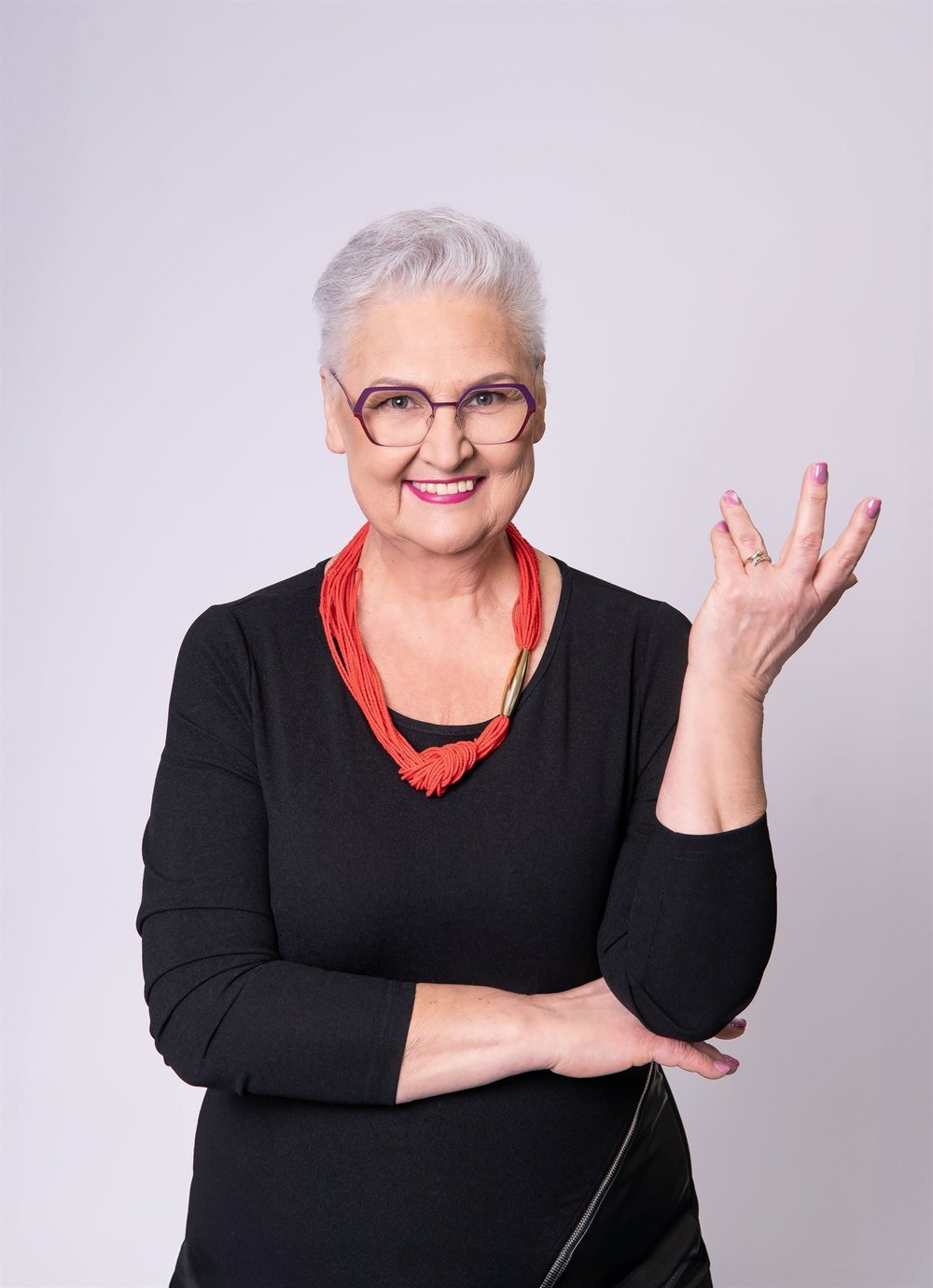
CEO of Silver TV, known online as Mądra Babcia (“Wise Grandma”). Speaker at I Love Marketing, a Polish marketing conference, where she talks about communicating with the 50+ generation.
silver-marketing.pl is published by Silver TV — internet television for viewers aged 50+ in Poland, with its own formats and a community on four platforms.
Formats for brands