
Knowledge: articles on how to talk to people aged 50+ in Poland. Figures with sources are in the Data section.
YOLD, Silver, Senior: three generations within one 50+ group
In a brief, the “50+” target looks like one group. In reality it holds three generations that work differently, spend money differently and use the internet differently. One creative for all of them lands best in the middle, where there is nobody.

The 50+ group splits into three segments with different habits and a different language of communication: YOLD (50 to 65), Silver (65 to 75) and Senior (75 and over). The wealthiest is the YOLD segment, and it is the one that rarely recognises itself in advertising aimed at “seniors”.
Who are the YOLD?
YOLD is short for “young old”. People between 50 and 65, mostly in work or recently retired, digitally skilled, mobile. They travel, change jobs, start businesses, complete postgraduate studies. They do not call themselves “senior”, and the word works on them like a closed door.
It is also the wealthiest generation in Poland. People over fifty with more than 16 years of work experience earn the most in the entire population, and at the same time they are usually past the biggest expenses of their lives: the mortgage paid off, the children raised. The money that is left goes on whatever they choose.
Who pays for your weddings? Who buys your children Porsche-brand prams? Who chips in for your flats?
How is the Silver segment different?
People aged 65 to 75, mostly retired. What changes here above all is the structure of time: suddenly there is a lot of it and it has to be filled with something. Life revolves around family, health, home and the passions there was never time for before.
This segment buys more cautiously than YOLD, but by no means less. It checks reviews, compares prices, asks friends. The decision takes longer, and once made, it holds longer.
What changes after 75?
In the Senior segment, digital contact largely goes through the people closest to them. Online shopping is often done by someone in the family, and the purchase decision is often shared. That changes who the communication is addressed to: an ad meant to work in this segment must also be clear to the person who helps.
It is also the only segment in which health categories dominate the others. The problem is that communication created for this segment usually reaches all three.
How do you turn this into a campaign?
Let's start with casting. The person in the photo should come from the segment we are talking to, not from the one we imagine as “older”. A fifty-eight-year-old woman does not identify with an eighty-year-old and sees the difference in the first second, long before she reads the headline.
Then the channel. YOLD and Silver are the core of the social media audience, while the Senior segment most often receives the message indirectly, through someone in the family. That changes not only the choice of platform but also the addressee: the ad must also be clear to the person who helps with the purchase.
Finally, pace. A performance campaign with a short conversion window works in YOLD, where the decision can be instant. In the Silver segment the same campaign looks like a failure, because the decision matures over weeks and the conversion arrives after the measurement has ended.
It is not an industry standard with a single owner. We take the boundaries of 50, 65 and 75 as a convention we use in planning, and that is how we present it here. Some market studies set them differently, for example at 55 and 70. When comparing two reports, the first question is therefore where each of them drew the line, because without that the numbers are not comparable.
How many people are in each segment?
We collect the size of each segment, together with its share of the population and spending data, in the overview Poles aged 50+ in numbers. There, every number comes with its publisher and measurement period.
Sources
Beata Borucka, talk at the I Love Marketing 2025 conference, a Polish marketing conference (YOLD, Silver, Senior segmentation; the claim about the wealth of the 50 to 65 generation)
Statistics Poland (GUS), Bank Danych Lokalnych [Local Data Bank], population structure by age - bdl.stat.gov.pl
IQS, „Poznaj Starszaków” [“Meet the Oldsters”], a report on the 50+ generation - grupaiqs.pl
ARC Rynek i Opinia, „Dojrzali konsumenci w Polsce” [“Mature consumers in Poland”], 2023, CATI N=1500 - arc.com.pl
The claim that people with more than 16 years of work experience earn the most comes from a conference talk and needs to be backed by Statistics Poland data on pay by length of service. We give it as the speaker's claim, not as a measurement.
Quick answers
What does YOLD mean?
YOLD is short for “young old”, meaning people between 50 and 65: mostly in work, digitally skilled and with the highest purchasing power in the whole 50+ group.
Is the three-segment breakdown a market standard?
No. It is a convention we use in campaign planning. Other studies use boundaries of 55 and 70, so when comparing reports you need to check which age ranges they used.
Which segment has the greatest purchasing power?
YOLD, meaning people aged 50 to 65. This generation is past the biggest expenses of life, usually with the mortgage paid off and the children raised, and is still in work.
Can the word “senior” be used in communication?
In the 75+ segment it is neutral. In the YOLD segment it works against its purpose, because these people do not identify with the term and read it as a message aimed at someone else.
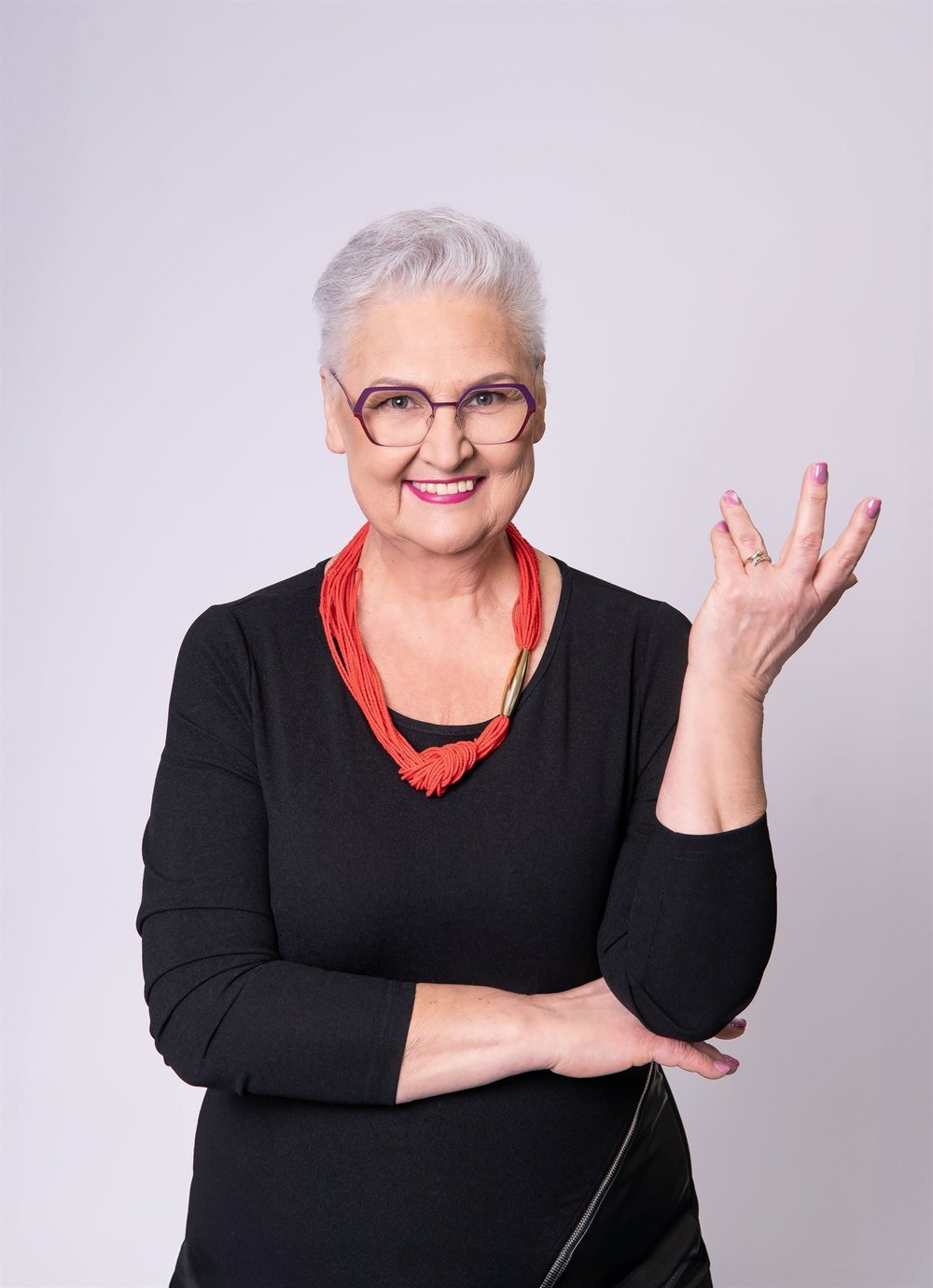
CEO of Silver TV, known online as Mądra Babcia (“Wise Grandma”). Speaker at I Love Marketing, a Polish marketing conference, where she talks about communicating with the 50+ generation.
silver-marketing.pl is published by Silver TV — internet television for viewers aged 50+ in Poland, with its own formats and a community on four platforms.
Meet the 50+ generation