
Knowledge: articles on how to talk to people aged 50+ in Poland. Figures with sources are in the Data section.
How Western brands talk to people aged 50+ today: menopause, grey hair and greywashing
I went West. With my finger on the reports rather than a map, because it's cheaper. I checked what brands in the United Kingdom, Germany, France and the USA did in 2025–2026 to get through to people over fifty.

In 2025–2026 Western brands began to show people aged 50+ as active consumers rather than patients, but research still measures how under-represented they are. According to CreativeX, women over 60 made up just 1.2 percent of women in ads from 2024. In a study by the UK's Advertising Standards Authority (ASA), 45 percent of people aged 55+ said that ads stereotype older people, and in France 62 percent of people aged 60–75 say that brands overlook them (Kantar Media).
Does Western advertising see people over fifty?
It does. From a long way off.
CreativeX went through 940 thousand ads from 2024. Women over sixty make up 1.2 percent of all women on screen. Two years earlier it was 2.8. And 94 percent of them were shown at home. At the stove, with the grandchildren, on the sofa.
The people concerned can see it. In the United Kingdom, 45 percent of people over 55 notice stereotyping in ads, and 28 percent of younger people. In France, 62 percent of people aged 60–75 say outright that brands forget about them. In Germany, 70 percent of people aged 50–69 want to be more visible in advertising.
| Country | Respondents | Result | Source |
|---|---|---|---|
| United Kingdom | people aged 55+ | 45% think ads stereotype older people | ASA, June 2025 |
| France | people aged 60–75 | 62% think brands overlook older people | Kantar Media, February 2025 |
| Germany | people aged 50–69 | 70% want more visibility in advertising | Score Media, June 2025 |
Which campaigns from 2025–2026 get it right?
In February 2025 L'Oréal Paris made Gillian Anderson, aged 56, a global ambassador and the face of the Age Perfect line for women over fifty.
In August 2025 Dove launched in the USA its first range of products for menopause symptoms, with the campaign “Made with TMI”. TMI stands for “too much information”, the things nobody mentions at the dinner table. Dove turned that into the subject of a campaign.
In February 2025 the German retailer Witt went on television with the campaign “Zeit für mich” for women aged 50–65. And Oura, the company behind the sleep-tracking ring, cast its May ad with people from their forties to over seventy: there is a street basketball player, there are tango dancers.
No walking sticks, no park benches. None of these brands has published sales results, so whether it paid off, we don't know.
What is greywashing?
Grey hair on the billboard and not a single grey hair in the company.
It was described in June 2025 by the authors of a piece in LSE Business Review. They looked at a full-page L'Oréal advertisement in the “New York Times”, in which the company boasted of employing more than 13 thousand people over fifty. With 90 thousand employees, that is about 15 percent. In the USA, people aged 50+ make up 35 percent of the workforce.
An ad with Gillian Anderson, and nothing but thirty-somethings in the marketing department. Here in Poland it is often similar, just without Gillian Anderson.
What does this mean for brands in Poland?
That we start from a worse position. In a 2025 Ipsos study, Poles put the start of old age at 64, while the average across 32 countries is 66. The French say 72. 71 percent of Poles are not looking forward to their own old age.
A country that considers itself old early, and ads that confirm it every day. More on this mechanism in the entry ageism in advertising.
The West shows that it can be done differently. Menopause without shame. Sixty without a walking stick. People aged 50+ not only on the billboard, but also at the table where the brief is written.
You don't need Gillian Anderson for this. All it takes is someone who remembers where you bought jeans in 1985.
Sources
CreativeX, “Gender in Advertising 2025 Report”, 21.03.2025 (analysis of 940 thousand ads from 2024) - creativex.com
Advertising Standards Authority (United Kingdom), “The Depiction of Older People in Ads”, Summary Report, 19.06.2025 (online survey, 4,306 people aged 16+) - asa.org.uk
Kantar Media France, „Comment aborder la cible des séniors dans vos campagnes publicitaires ?” [“How to approach the senior target in your advertising campaigns?”], February 2025 (TGI panel, people aged 60–75, data for 2024) - kantarmedia.fr
Score Media Group, Pulse-Check „Generation 50+”, press release of 30.06.2025 (people aged 50–69 in Germany) - score-media.de
Ipsos Global Advisor, “Attitudes to Ageing 2025”, July 2025 (32 countries, 23,745 respondents; results for Poland and France read from the report's charts) - ipsos.com
D. Jolles, C. Vaccarone, “Featuring grey hair, but not really including older workers”, LSE Business Review, 2.06.2025 - blogs.lse.ac.uk
L'Oréal Paris and Gillian Anderson, TheIndustry.beauty, 24.02.2025 - theindustry.beauty
Dove, Women's Wellness and “Made with TMI”, PR Newswire press release, 4.08.2025 - prnewswire.com
Witt, „Zeit für mich” [“Time for me”], neuhandeln.de, 28.02.2025 - neuhandeln.de
Oura, “Give Us the Finger”, LBBonline, 2.06.2025 - lbbonline.com
We checked the campaign figures and dates with the publishers and in the trade media on 29.09.2026. The Kantar Media and Score Media studies do not give sample sizes. The often-quoted figure “older people are 4 percent of people in ads” comes from data for 2022, which is why we do not use it.
Quick answers
How do Western brands advertise to people aged 50+?
In 2025–2026 they increasingly show them as active consumers and speak openly about issues that matter to this group, such as menopause. Examples include L'Oréal Paris with Gillian Anderson, Dove, the German retailer Witt and Oura.
How many older people do ads show?
According to CreativeX, women over 60 accounted for 1.2 percent of women in ads in 2024, compared with 2.8 percent in 2022. 94 percent of them were shown in domestic roles.
What is greywashing?
It is promoting openness to older people in advertising without backing it up in the company's own practice, for example in hiring people aged 50+. The term was described in 2025 by D. Jolles and C. Vaccarone in LSE Business Review.
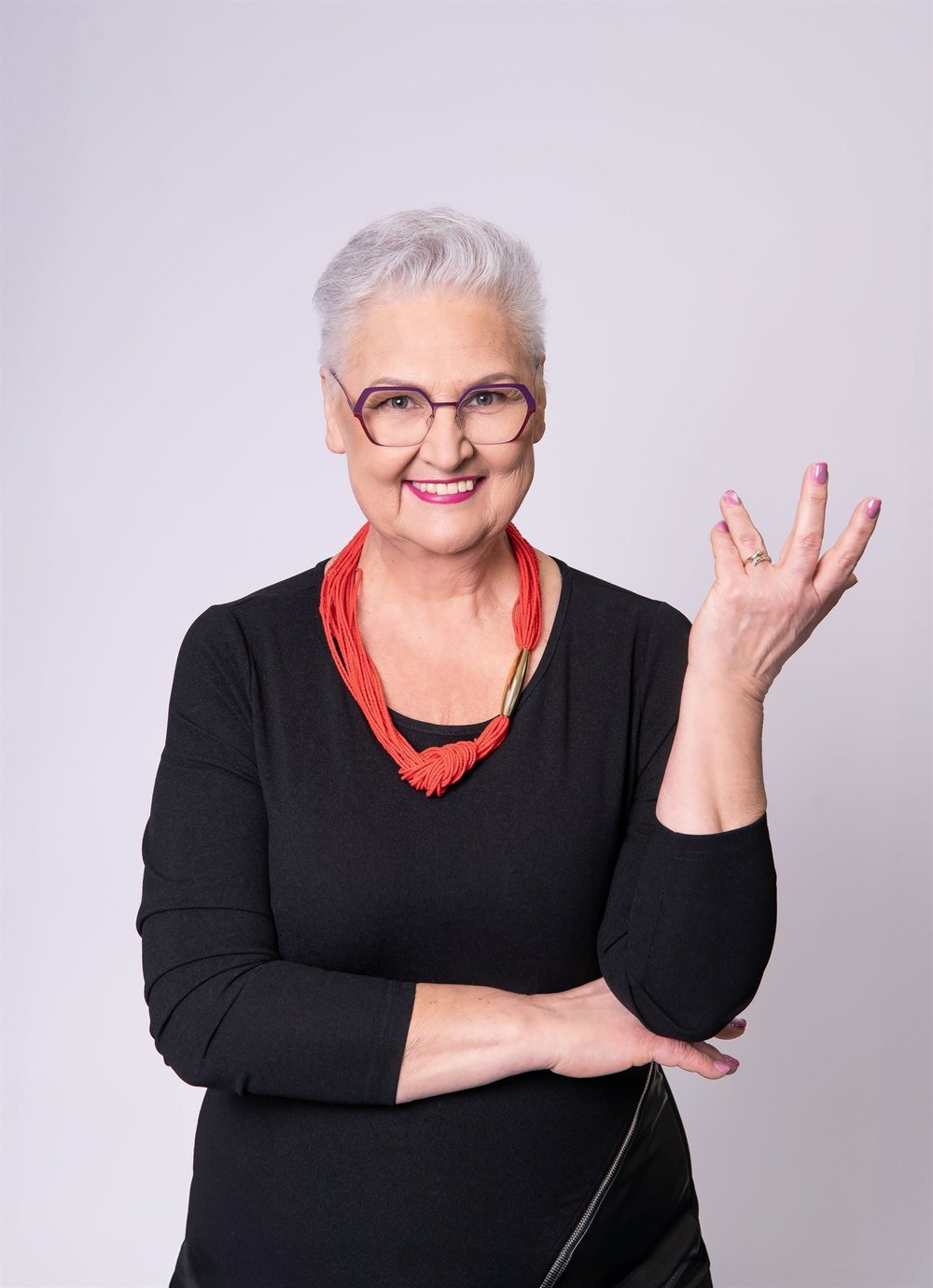
CEO of Silver TV, known online as Mądra Babcia (“Wise Grandma”). Speaker at I Love Marketing, a Polish marketing conference, where she talks about communicating with the 50+ generation.
silver-marketing.pl is published by Silver TV — internet television for viewers aged 50+ in Poland, with its own formats and a community on four platforms.
Formats for brands