
Knowledge: articles on how to talk to people aged 50+ in Poland. Figures with sources are in the Data section.
Why something always ails people aged 50+ in advertising
For years I have been watching ads in which a person my age appears only together with an ailment. This is not malice on the industry's part. It is a mechanism that starts when the brief is written and ends at the casting.

Ads aimed at people over 50 show an ailment because they are made almost exclusively in health categories and written by people a generation younger than their audience. People over 45 make up about 10 percent of advertising professionals, while consumers aged 54+ account for over 40 percent of consumer spending. This imbalance is the starting point for everything else.
Who writes the ads aimed at people over fifty?
People who do not know this group from their own lives. According to California Management Review, people over 45 make up about 10 percent of advertising professionals, while consumers aged 54+ account for over 40 percent of spending. The share of the money and the share of the decisions about how to talk to that money are an order of magnitude apart.
There is no conspiracy here and no dislike. A creative writes from the material they know, and that material is their own life and the lives of the people they see every day. A thirty-year-old writing to a thirty-year-old tests the idea on themselves, and does it by reflex, throughout the whole project. Writing to a sixty-year-old, they have nothing to test it on, so they reach for an image they have already seen somewhere, which means the previous ad.
That is how the loop forms. Each new piece of creative reproduces the last one, and after a few rounds nobody remembers where the first rag-coloured jumper came from.
Why does the brief for this group come from a health category?
Because that is the only place where anyone describes the audience by age at all. Supplements, over-the-counter medicines, rehabilitation equipment, life insurance and funeral services have it written in the brief in so many words: target group 55 plus. In categories that have nothing to do with health, the audience is described by lifestyle, life stage or attitude to the category, and then a fifty-year-old does not appear in the brief at all, even though they buy exactly the same product.
The result is arithmetic. If the only briefs that mention this age come from ailment categories, then the only ads in which this group appears show it as a patient. Nobody made that decision. It came out of the sum of the briefs that happened to come in.
of advertising professionals are over 45
of consumer spending comes from the 54+ group
share of people aged 50+ in Poland's population
What does casting look like when the brief says “senior”?
You look for a role, not a person. The word “senior” in a brief works like a costume instruction: grey hair yes, but not too fashionable, a quiet jumper, a flat with an old wall unit, careful movements. The actress who gets the part is told to play the age, and then she plays it through everything at once, from her walk to her tone of voice.
It's never that they show us a nice trip and mature people enjoying themselves on it. No, it'll be a log that won't catch fire.
A character is built differently. You start from the situation: what this person is doing right now, why they are doing it and who cares about it. Age then becomes one of their traits, next to their job, their sense of humour and the way they hold their phone. Viewers recognise the difference immediately, before they have time to name it.
Our own audience measurement shows the same crack. Women over 45 make up 64.3 percent of the people who watch our content, and they are the same women to whom advertising offers an appetite syrup. The full demographic breakdown is in the dataset on who watches content for 50+.
How does the language of relief differ from the language of benefit?
In its starting point. The language of relief assumes there is a problem on the other side to be removed, so before it offers anything, it has to name that problem and dwell on it for a while. The language of benefit assumes a choice between good and better and does not need any diagnosis to start the conversation.
The first approach is natural in health categories and bothers nobody there, because a person who really has a problem is looking for exactly that, relief. The trouble starts when this tone is carried over to categories where there is no problem at all: cosmetics, clothing, holidays, phones, banking. A shampoo sold in the language of relief tells its audience that something is wrong with them before it gets round to saying what is good inside the bottle.
What happens when the audience does not recognise themselves in the ad?
They stop listening, and earlier than any attention model assumes. In this group, recognising yourself works as the entry condition for a message: until it is there, the rest of the arguments go into a void.
The cost of this mistake goes beyond a single campaign. 69 percent of mature people say they are ready to abandon a brand for a better solution, so what is at stake is a place in the basket for years to come. On top of that, 46 percent of this group are increasing their online activity at the expense of television, which adds a second mismatch: a brand that holds on to the old image usually holds on to the old media plan too.
| Item | Value | Period | Source |
|---|---|---|---|
| Advertising professionals over 45 | approx. 10% | 2026 | California Management Review 68(2)/2026 |
| Share of the 54+ group in consumer spending | over 40% | 2026 | California Management Review 68(2)/2026 |
| Share of people aged 50+ in Poland's population | 39.9% | 2025 | Statistics Poland (GUS), as of 31 December 2025 |
| Ready to abandon a brand for a better offer | 69% | 2025 | talk at I Love Marketing 2025, citing a consumer survey |
| Increasing online activity at the expense of television | 46% | 2025 | talk at I Love Marketing 2025, citing a consumer survey |
| Women over 45 in the Silver TV audience | 64.3% | June 2026 | own data, YouTube Analytics |
What to change in your next brief?
Start by crossing out the number. The line “target group 55 plus” says nothing about the audience except their year of birth, and year of birth is not the reason anyone buys anything. In its place goes the situation: who this person is, what they are doing right now, what decision they face and what is holding them back. Why age alone is the costliest shortcut in this category I explain in the piece on what silver marketing is.
The second thing is about staffing, and nobody likes to hear it. If the team working on a campaign for this group has not a single person from this group, the creative will be tested only on people who are not the audience. It comes down to one simple possibility: that someone in the process can say “I don't look like that and I don't talk like that” before a viewer does it in the comments.
The third is the simplest. Show the product, not the diagnosis. The other myths that spoil the same campaigns on the media side are in the overview of five myths about the 50+ consumer, and the split of the group into three different generations is described in the piece on YOLD, Silver and Senior.
The values of 10 percent and over 40 percent come from California Management Review 68(2)/2026 and concern the American market, not the Polish one. Nobody publishes the age structure of the advertising industry for Poland, so we treat them as an order of magnitude and say so openly. The values of 69 percent and 46 percent were given in a conference talk that cited consumer surveys without naming the publisher, and we are still looking for the original publication.
The description of the brief and casting mechanism is our interpretation, based on observing the market and on conversations with brands, not the result of a study. We have no measurement showing what share of campaigns aimed at the 50+ group in Poland are made in health categories, and we are looking for one.
Sources
California Management Review 68(2)/2026 (share of advertising professionals over 45, share of the 54+ group in consumer spending)
Beata Borucka, talk „Mam coś, musi dolegać” [“I've got something, it has to ail me”], I Love Marketing 2025, a Polish marketing conference (the pattern of the 50+ image in advertising, 69 percent ready to abandon a brand, 46 percent increasing online activity at the expense of television)
Statistics Poland (GUS), „Ludność. Stan i struktura oraz ruch naturalny w przekroju terytorialnym w 2025 r. Stan w dniu 31 grudnia” [“Population. Size and structure and vital statistics by territorial division in 2025. As of 31 December”], table 1 (14.9 million people aged 50+, a 39.9 percent share; the age groups were summed by Silver TV) - stat.gov.pl
Silver TV own data, YouTube Analytics, audience_demographics report for June 2026 (64.3 percent of the audience)
The California Management Review data describe the American market. The values of 69 percent and 46 percent come from a conference talk that did not name the publisher of the survey.
Quick answers
Why do ads for people aged 50+ show illnesses and ailments?
Because almost all briefs that mention this age come from health categories: supplements, medicines, rehabilitation equipment and insurance. In other categories the audience is described by lifestyle and life stage, so a person over fifty does not make it into the brief at all.
How many advertising professionals are over 45?
About 10 percent, according to California Management Review 68(2)/2026. For comparison, consumers aged 54+ account for over 40 percent of consumer spending. The data concern the American market; nobody publishes a comparable measurement for Poland.
What is ageism in advertising?
Showing age as a role to be played: a person over fifty appears in an ad as a patient or as a costume of old age, when in fact they are making an ordinary purchase decision. Most often it results from the way ads are produced, not from anyone's ill will.
How should the 50+ group be described in a brief so that the creative does not turn into a caricature?
By describing the situation: what this person is doing, what decision they face and what is holding them back. The line “target group 55 plus” on its own gives a creative nothing to build a scene from.
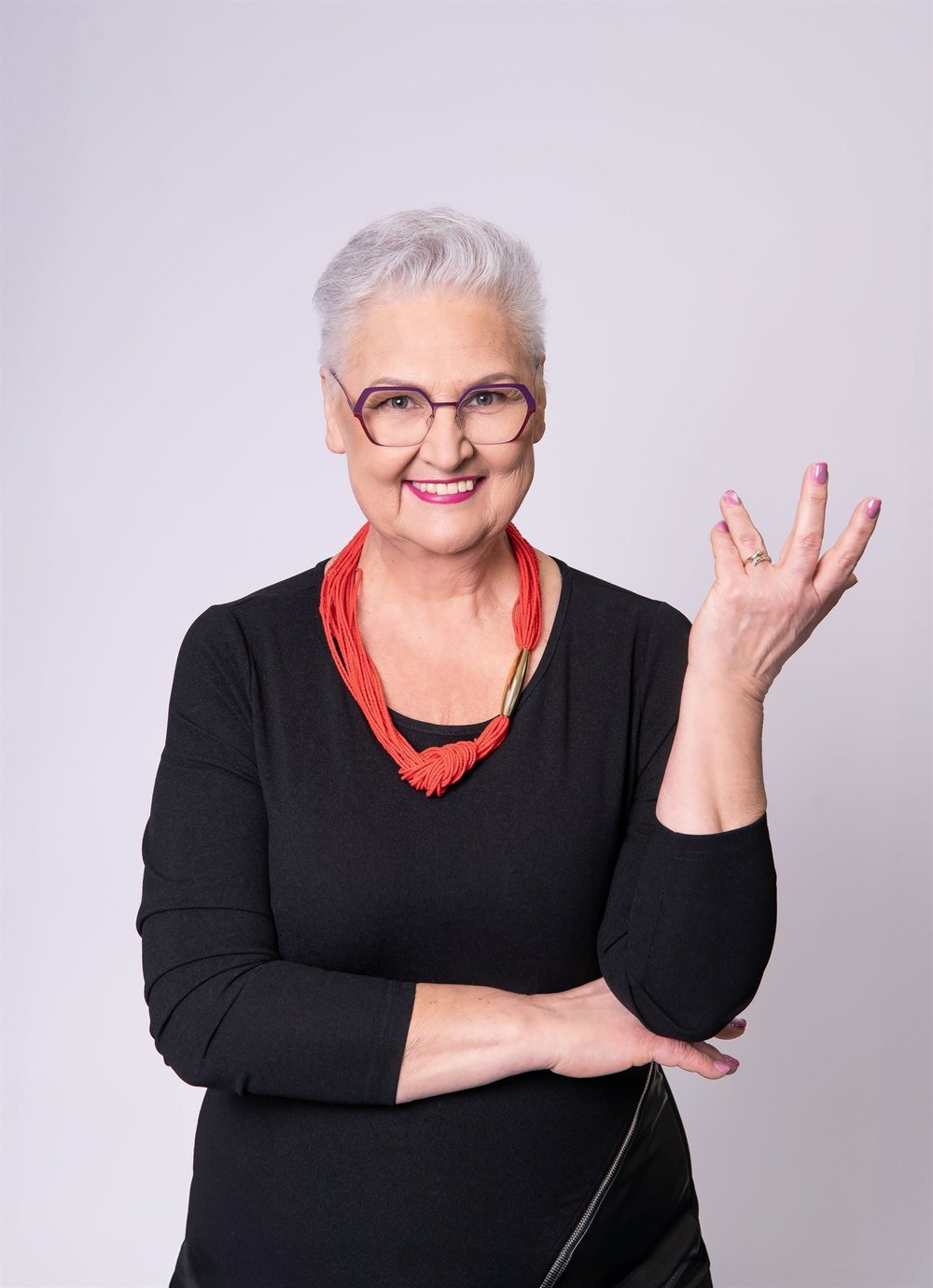
CEO of Silver TV, known online as Mądra Babcia (“Wise Grandma”). Speaker at I Love Marketing, a Polish marketing conference, where she talks about communicating with the 50+ generation.
silver-marketing.pl is published by Silver TV — internet television for viewers aged 50+ in Poland, with its own formats and a community on four platforms.
Formats for brands