
Knowledge: articles on how to talk to people aged 50+ in Poland. Figures with sources are in the Data section.
What silver marketing is and why it is not about age
There are 14.9 million people aged 50+ in Poland, and yet they are almost invisible in advertising. The reason is not the data, which has been available for years. It is the assumption that a consumer's age is enough to know what they want.
Silver marketing is marketing communication aimed at consumers over 50, based on their real needs and shopping habits rather than on age as the only segmentation criterion. Age tells you how old someone is. It does not tell you how much money they have, whether they shop online, whether they switch brands or where they spend their evenings. And those are the questions a campaign depends on.
Where did the term come from?
From demographics. People over fifty make up 39.9 percent of Poland's population, and as this group ages, its share of consumer spending grows. At the same time, only 10 percent of advertising professionals are over 45. So the creative work is made mostly by teams who know this audience second-hand.
The name “silver” caught on in Europe together with the idea of the silver economy, and it made its way into briefs before anyone agreed on what exactly it means. That is why today it is used in two ways: as the name of an audience and as the name of a communication style. I am interested in the second meaning, because the first can be handled with an age filter in an ad manager, while the second requires understanding who you are talking to.
Why does segmentation by year of birth fail?
Because the gap between a fifty-year-old and an eighty-year-old is wider than the gap between a twenty-year-old and a forty-year-old. Someone aged 52 may be at the peak of their career and still supporting adult children. Someone aged 78 deals with the digital world mainly through their grandchildren. A shared “50+” target glues these two situations into one and tells you to speak to both in a single voice.
In practice it ends in two pictures, both equally untrue. On one side, people with some ailment whose mood is lifted by a single bottle of syrup. On the other, a granny with pink hair on a skateboard. There is nobody in between, even though that is exactly where this whole group lives.
Poles over 50
share of the population
of advertising professionals are over 45
What does this group look like from the inside?
It splits into three segments with different habits: YOLD (50 to 65), Silver (65 to 75) and Senior (75 and over). The names matter less than the boundaries, because the boundaries show where the way of life changes: paid work, free time, digital skills, contact with family. The YOLD segment is also the wealthiest in the entire population, not just within the 50+ group.
I describe the breakdown into segments, with their size and sources, in a separate piece on three generations within the 50+ group.
What silver marketing is not
It is not marketing of products “for seniors”. A fifty-year-old woman does not need a separate shampoo. She needs a good shampoo and a photo in which she recognises herself. Nor is it communication about health, although that is how it looks from the briefs: supplements and medicines are one category among many, and this group buys clothes, cosmetics, services, electronics, trips and cars.
Finally, it is not a cheap campaign. Separate creative work and different channels cost money. That money comes back in a higher basket value and in a relationship that lasts longer than in younger segments.
Where is this group really?
Not where the briefs look for it. I get requests for an Instagram reel and an Instagram story, even though people aged 50+ in Poland have about 5.8 million active profiles on Instagram and 6.2 million on Facebook. Many agencies have shelved Facebook as an exhausted channel, and yet that is where the audience those same briefs ask about actually sits.
Why go fishing in the woods?
The full breakdown of reach, with the measurement methodology for each platform, is in the overview of the 50+ audience on social media.
Where should planning start?
With three questions, asked before choosing a channel and before the creative brief. Which segment buys this product? The answer “all of them” means nobody knows yet, and the campaign will fall apart only at the creative stage, when someone has to choose a face and a situation. Does this person see herself in the ad, rather than someone her age? That is not the same thing: it is about her flat, her holidays, her decisions. And the last one: does the channel have this audience, or only good results in other groups? Reach among 25 to 34-year-olds says nothing about reach among 55 to 64-year-olds, even if it looks just as good in a presentation.
Sources
Statistics Poland (GUS), „Ludność. Stan i struktura oraz ruch naturalny w przekroju terytorialnym w 2025 r. Stan w dniu 31 grudnia” [“Population. Size and structure and vital statistics by territorial division in 2025. As of 31 December”], table 1 (14.9 million people aged 50+, a 39.9 percent share; the age groups were summed by Silver TV) - stat.gov.pl
California Management Review 68(2)/2026 (share of advertising professionals over 45, share of the 54+ group in consumer spending)
Beata Borucka, talk at the I Love Marketing 2025 conference, a Polish marketing conference (number of active 50+ profiles on Facebook and Instagram, YOLD, Silver, Senior segmentation)
Kantar Polska, Adres:Media, „Przyszłość to 50+. Marketing w tyglu demograficznych zmian” [“The future is 50+. Marketing in the melting pot of demographic change”], 2024 - 50plus.kantarpolska.pl
The social media profile figures come from a conference talk and need to be confirmed in Mediapanel or PBI. We give them with this caveat, because that is how we received them.
Quick answers
What is silver marketing?
Silver marketing is marketing communication aimed at consumers over 50, based on their real needs and shopping habits rather than on age as the only segmentation criterion.
Is silver marketing the same as senior marketing?
No. Senior marketing concerns the oldest part of the group and most often health categories. Silver marketing covers the whole 50+ group, in which the wealthiest segment is aged 50 to 65 and does not call itself “senior”.
At what age does the silver group begin?
Most often at 50. Some studies use 55 or 60, so when comparing data you need to check which threshold the author used.
Do you need a separate product for people aged 50+?
No. In most categories this group buys the same products as everyone else. What sometimes differs is the communication, not the product range.
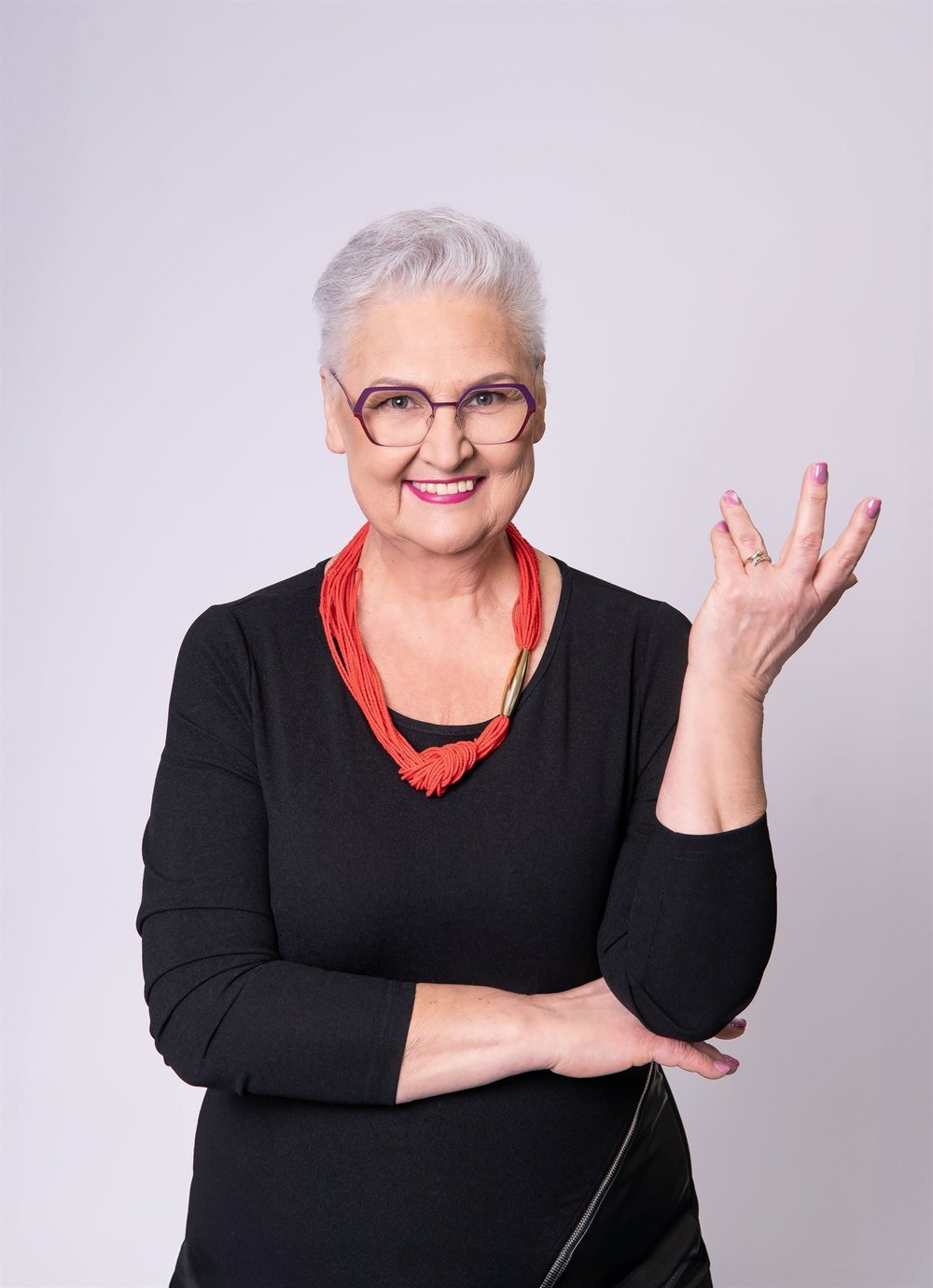
CEO of Silver TV, known online as Mądra Babcia (“Wise Grandma”). Speaker at I Love Marketing, a Polish marketing conference, where she talks about communicating with the 50+ generation.
silver-marketing.pl is published by Silver TV — internet television for viewers aged 50+ in Poland, with its own formats and a community on four platforms.
Visit Silver TV